AI receptionist and confidentiality in a medical practice.
What an AI receptionist may know depends on what it does. The GDPR and AI Act rules for a dental or medical practice, and how you configure for them.
You are considering an AI receptionist for your practice. When your assistant picks up the phone, a conversation with a patient is just a conversation. When an AI picks up, that same conversation is a processing of health data.
The distinction sounds formal, but it decides how you set the thing up. An AI has no instinct for what to hold on to and what to let go. What it remembers, and what it is allowed to use that for, is exactly what you configured.
So the question is not whether it may hear that someone is in pain. Your assistant hears that too. The question is what it does with it. Two pieces of EU law give a surprisingly concrete answer, and they apply to a dental practice as much as to a physiotherapy or general practice.
This piece covers the European rules. If you practise in the United States, HIPAA applies instead and the second half of this article does not.
What it may know depends on what it does
The GDPR ties access to purpose: an assistant that books appointments may process what booking requires, and nothing beyond that.
That principle is called data minimisation. Article 5(1)(c) requires personal data to be “adequate, relevant and limited to what is necessary in relation to the purposes for which they are processed”.
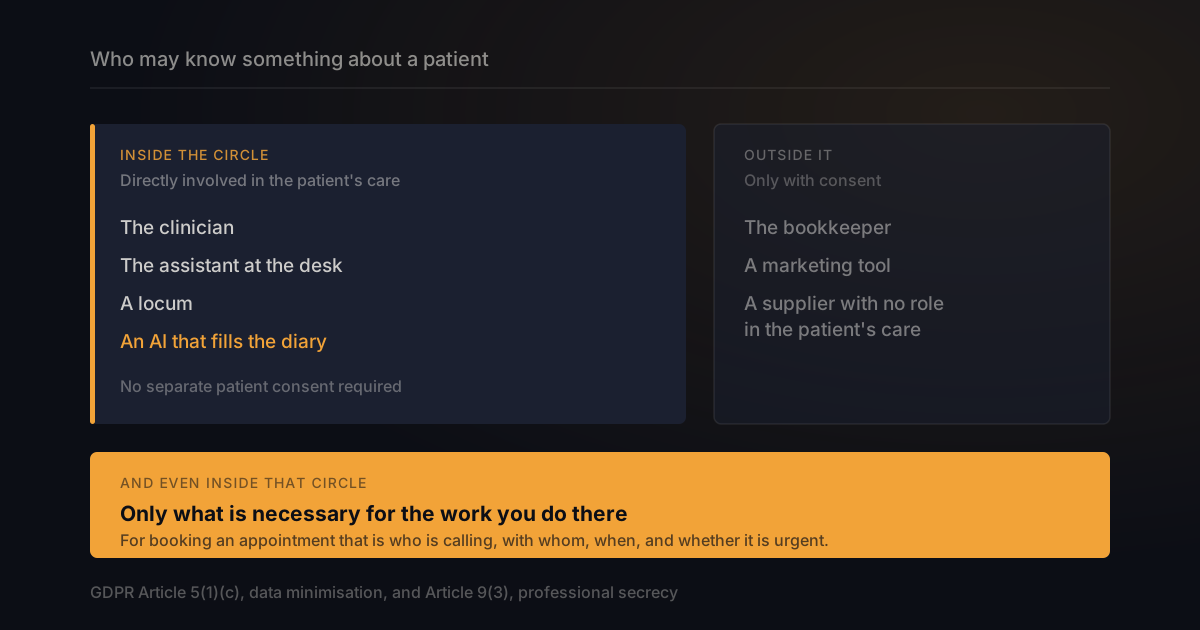
Read that against the job you are actually hiring the AI to do. To find a slot it needs to know who is calling, which clinician, when it suits and whether it is urgent. That is the whole list.
Why someone is in pain is not on it. It will hear it anyway, because patients explain themselves, and that is fine. What matters is that you did not build a system that goes fishing for it. So do not have it ask about the complaint, and do not have it probe. When a caller starts telling a medical story, transferring to a human is the right move, not a follow-up question. Where a person is the better answer altogether is covered in the comparison with an answering service.
What it hears for one task may not be reused for another
Data collected in order to book an appointment may not later be used for a recall campaign or a treatment offer.
This is purpose limitation. Article 5(1)(b) says data is “collected for specified, explicit and legitimate purposes and not further processed in a manner that is incompatible with those purposes”.
With a human this takes care of itself. Your assistant hears that someone is in pain, books the slot and thinks no more of it. With a system, every call becomes searchable text, and reuse turns into a single query.
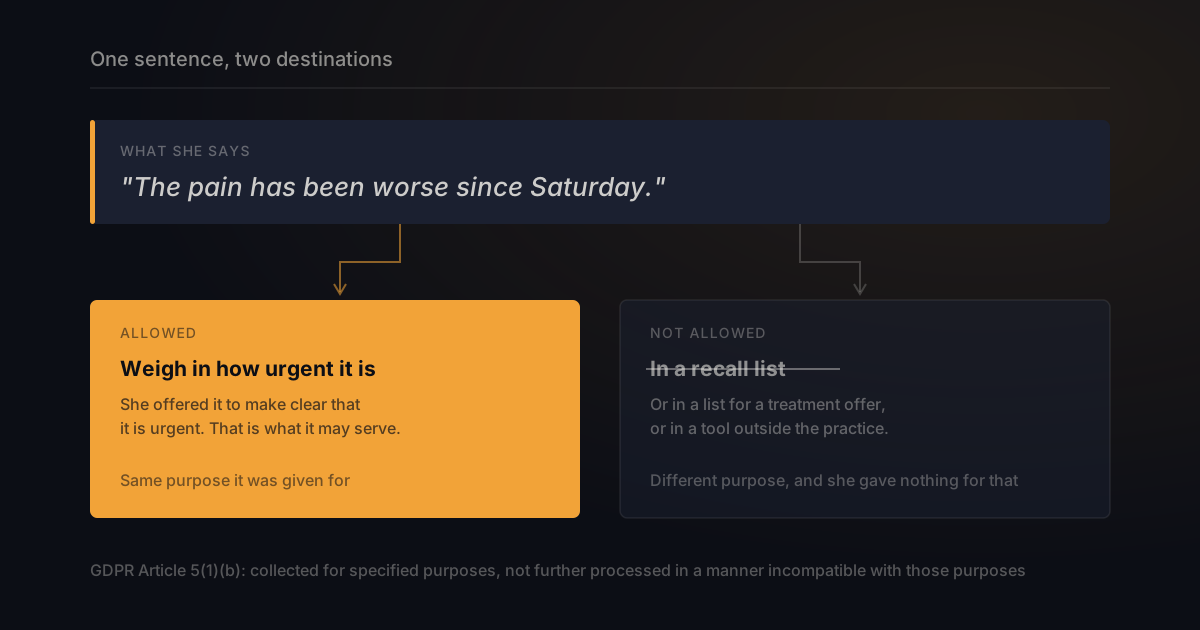
She mentions it is getting worse to make clear that it is urgent. That may weigh in how quickly you fit her in, because that is what she offered it for. The same sentence may not end up in a list of patients worth contacting again. Same words, different purpose, and the second purpose is not covered.
So follow the data. An AI receptionist that pushes its summaries into a marketing tool is doing something the patient never agreed to.
The phone call is not the medical record
National law sets a long retention period for the medical record. A call recording is not that record and falls under storage limitation.
In the Netherlands that period is twenty years from the last change to the file, and most member states set something similarly long. In healthcare that horizon sits so deep in the reflexes that it gets applied to everything.
Do not apply it here. The medical record holds what is necessary for treating the patient. A call about an appointment is not that. The appointment belongs in your practice system; the conversation in which it was made does not.
For that conversation the opposite rule applies. Article 5(1)(e) says data must be “kept in a form which permits identification of data subjects for no longer than is necessary for the purposes for which the personal data are processed”. The purpose was to book an appointment, and that purpose is finished once the appointment stands.
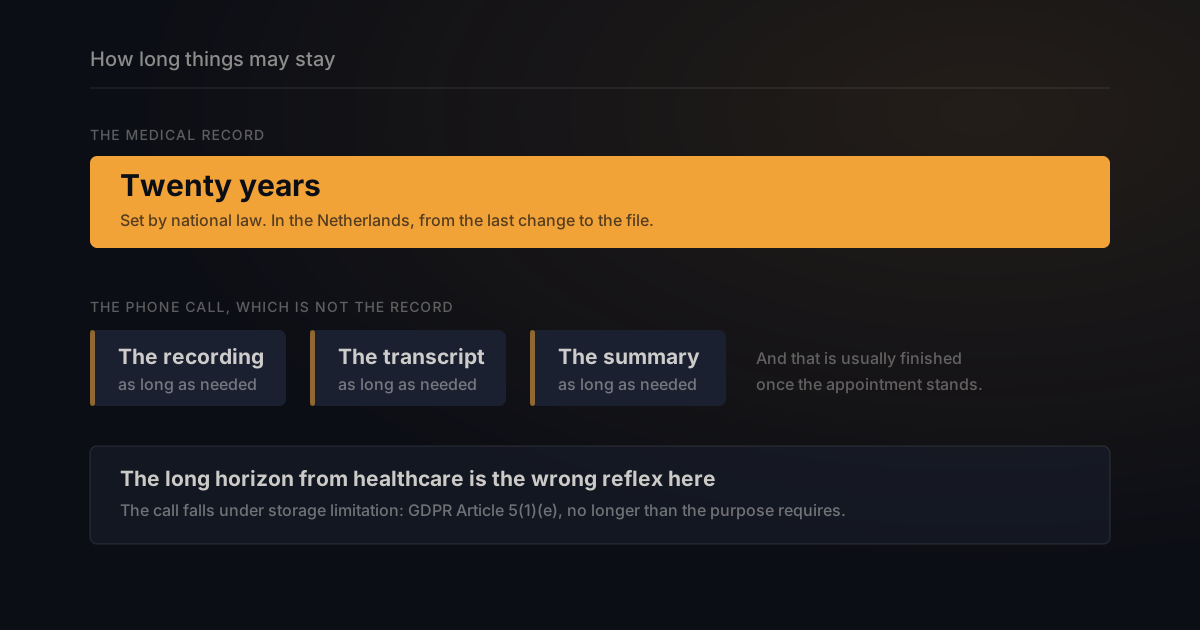
One phone call usually leaves three things behind: a recording, a transcript and a summary. They do not have to live equally long, and none of them has to live for twenty years.
Whoever handles the call must be bound by secrecy
The GDPR’s health care exemption applies only where the data is processed by someone bound by an obligation of professional secrecy.
This is the provision most often skipped. Processing health data is simply forbidden under the GDPR. Article 9(1), literally: “shall be prohibited”. There is an exemption for healthcare in Article 9(2)(h), but it applies “subject to the conditions and safeguards” of paragraph 3.
And paragraph 3 says it is allowed only where the data is “processed by or under the responsibility of a professional subject to the obligation of professional secrecy under Union or Member State law … or by another person also subject to an obligation of secrecy”.
Secrecy is therefore not a box to tick alongside the GDPR. It is the condition your right to process the call rests on. Which statute binds you depends on your country: in the Netherlands it is Article 88 of the Wet BIG, elsewhere it is the equivalent professional code.
In practice: a data processing agreement governs how a supplier handles data. Whether the people who can reach it are bound by secrecy is not automatically in there. That is a separate arrangement and you make it explicitly.
And she must know she is talking to a machine
Since 2 August 2026, an AI that interacts directly with people must make clear at the start of the call that it is an AI.
The EU AI Act requires in Article 50(1) that “the natural persons concerned are informed that they are interacting with an AI system”, and paragraph 5 sets the moment: “at the latest at the time of the first interaction or exposure”. So in the opening seconds, not at the end and not buried in a privacy policy.
The duty sits with the provider of the system, not with you. But it is your patient who does not know if it goes wrong.
And it fits everything above. Someone who knows she has the scheduling assistant on the line rather than the dentist calibrates what she says. The disclosure is not a formality; it is the moment the patient gets to decide how far she goes.
How BeepSweep handles it
Sweep says at the start of every call that it is an AI assistant. That is fixed on, not a setting you can switch off.
On access following purpose we sit on the right side, though not out of virtue: we do not integrate with any practice management system or patient record. Sweep cannot read the file, not even by accident. If you need a calendar integration we are the wrong choice.
You switch on call forwarding when you do not answer and keep your own number. Sweep asks for a name and a reason, sends you a briefing and can transfer live. Nothing is used to train models.
Two things we cannot do. Steering what does and does not end up in the summary is not possible: you get the whole conversation. And retention is set per plan, not per component, so recording and transcript live equally long: 30 days on free, a year on Solo and Business, unlimited on Enterprise.
Storage and hosting are in Amsterdam with AES-256, although the call itself partly runs through a service in the US under SCCs and the Data Privacy Framework. Free is €0 with 15 messages a month; Sweep starts at €6.99, and what these services normally cost is covered separately. Questions about your practice? Message us on WhatsApp at +31 85 083 5355.
Frequently asked questions
May I let an AI answer the phone in a medical practice?
The law does not forbid it. It sets conditions on what such a system may know, what it may use that for and how long it may keep it, and you translate those conditions into how you configure it.
Does this apply to a physiotherapy or general practice too?
Yes. The GDPR makes no distinction between disciplines, and the secrecy obligation applies to every regulated healthcare profession, from dentist and doctor to physiotherapist and psychologist.
Is a data processing agreement enough?
It governs how a supplier handles data. Whether the people who can reach that data are bound by an obligation of secrecy is a separate question, and one you settle separately.
Does the disclosure duty cover a chatbot on my website?
The regulation speaks of AI systems intended to interact directly with natural persons and names no channel. On a plain reading a chat window falls under it just as much as the phone.
How long may I keep a recorded call with a patient?
There is no fixed period in the law. The test is that it is kept in identifiable form no longer than the purpose requires, and that purpose is usually complete once the appointment stands.